
Ad — affiliate links: If you buy through some links in this article, Happy Pup HQ may earn a commission at no extra cost to you. As an Amazon Associate I earn from qualifying purchases.
If the electricity went off tonight, would you have everything your dog or cat needed? What if the water supply was interrupted, you couldn’t pay by card, or your usual delivery didn’t arrive?
With two dogs and seven cats in our family, this is something I’ve been thinking about carefully. Our German Shepherd, Loki, has ongoing allergy treatment needs. For us, preparing means looking beyond an extra bag of food and thinking about medication, individual diets and who could help if we weren’t home.
The UK government’s Be Ready campaign encourages households to prepare for three days of disruption. It includes pet food and bottled water on its checklist. Pet charities have useful guidance too, but it helps to turn that advice into a plan for the animals who actually live with you.
Here is a practical starting point for dogs and cats, whether disruption comes from severe weather, a power cut, a water outage or a cyber incident affecting everyday services. This guidance does not mean an attack is imminent.
Start with three days of your pet’s usual essentials
Check what you already have before buying anything. Build a modest reserve gradually and rotate it through normal use. Three days is a starting point for household planning, rather than a promise that every emergency will end within that time. Follow any specific local instructions.
For food, work from each animal’s normal daily portions. In a mixed household, write separate totals for dog food, cat food and any prescribed diets. Keep the usual feeding instructions with the supplies so another person can follow them.
If your pet depends on refrigerated or frozen food, ask your vet about a suitable shelf-stable backup before you need it. An emergency is a difficult time to discover that an alternative is unsuitable or refused. Pack a manual tin opener if the food needs one.
Build a 7–14-day food reserve at home
Once you have three days covered, build up to seven days of each pet’s usual food. If you have room, work towards 14 days, especially if a prescription diet takes time to order or you rely on deliveries. Add a little to your normal shop and use the oldest stock first. Keep the first three days easy to grab and the rest in your home reserve.
Dogs: Write down what each dog actually gets in 24 hours, in grams, tins or pouches. Include the number of meals, any wet and dry portions separately, and any prescribed instructions about feeding times. If you use a scoop, weigh a normal day’s portions once so someone else can repeat them.
Cats: Count each cat individually, even if they eat the same brand. Record wet and dry food separately and pack the food each cat will reliably eat. Set aside labelled portions and feed separately where needed so a cat on a special diet gets the right food. Keep familiar bowls handy if an automatic feeder stops.
Special diets: Record the exact product and recipe, daily amount and feeding times for pets on allergy, kidney, urinary, diabetic or other vet-directed diets. Ask your vet in advance which substitute, if any, is suitable and where you can get it. If a pet is eating less than usual and medication depends on mealtimes, call your vet for instructions.
Storage: Keep dry food in its original bag inside a clean, sealed container in a cool, dry place. Store unopened tins and pouches as directed, above likely flood level. Note expiry dates and keep the batch details. Refrigerate opened wet food promptly according to the label, or discard leftovers if safe refrigeration is unavailable. Single-meal pouches are useful during a cut if they suit your pet’s diet. Keep frozen or raw diets only as directed and use a vet-agreed backup if you lose the cold chain. Discard pet food that has come into contact with floodwater.
Store water for the pets as well as the people
Your household water allowance needs to include your animals. The government’s three litres per person per day is a human drinking-water figure, not an allowance that already covers pets.
Make a separate note of what every dog and cat normally drinks, allowing for water added to meals and washing bowls. Ask your vet for help planning if your pet has a medical condition affecting their needs. Keep clean water available; never ration it to force supplies to last.
A useful practical check is whether your pets can drink without electricity. Keep ordinary bowls available alongside powered fountains, and make sure everyone knows where they are. Follow your water supplier’s instructions during an incident; don’t assume suspect tap water is safe for animals.
Calculate your pets’ drinking-water reserve
For emergency storage, start with 60 ml of potable water per kg of body weight per day for each healthy adult dog or cat, then round the household total up. This is a stocking estimate. The American Animal Hospital Association lists 60 ml/kg/day as one adult dog maintenance estimate and 40 ml/kg/day as one adult cat estimate. Cornell’s feline guidance gives about 52 ml/kg/day from all sources, including moisture in food. Using 60 ml for both gives one simple calculation and avoids relying on wet food to supply part of the reserve.
Keep fresh water freely available. Actual needs vary with diet, heat, activity, life stage and health. Plan for more if a pet routinely drinks more, and agree an individual plan with your vet for puppies, kittens or pets with conditions such as kidney disease or diabetes. Follow water-company instructions during an outage or contamination notice, and use bottled drinking water for pets while tap-water safety is uncertain. Keep pets away from floodwater.
Food and water calculations for several pets
Food: Multiply each daily portion by the number of days. Add portions only when pets eat the same product, and round up to whole tins, pouches or bags. Water: Multiply each pet’s weight in kg by 60, add the results, divide by 1,000 to get litres and multiply by the number of days.
| Supply | Daily | 3 days | 7 days | 14 days |
|---|---|---|---|---|
| Dog A | 300 g | 900 g | 2.1 kg | 4.2 kg |
| Dog B (special diet) | 200 g | 600 g | 1.4 kg | 2.8 kg |
| Cat A | 2 pouches | 6 pouches | 14 pouches | 28 pouches |
| Cat B | 3 pouches | 9 pouches | 21 pouches | 42 pouches |
| Supply | Daily | 3 days | 7 days | 14 days |
|---|---|---|---|---|
| Dog A (25 kg) | 1.50 L | 4.50 L | 10.50 L | 21.00 L |
| Dog B (15 kg) | 0.90 L | 2.70 L | 6.30 L | 12.60 L |
| Cat A (4 kg) | 0.24 L | 0.72 L | 1.68 L | 3.36 L |
| Cat B (5 kg) | 0.30 L | 0.90 L | 2.10 L | 4.20 L |
| All four pets | 2.94 L | 8.82 L | 20.58 L | 41.16 L |
The bottom row combines all four pets. Their drinking-water reserve comes to 2.94 litres for one day and 8.82 litres for three days. Round the household totals up to at least 9 litres for 3 days, 21 litres for 7 days or 42 litres for 14 days. Keep a separate allowance for people.
Add water for hygiene: Measure how much safe water you use on a normal day to wash bowls and feeding utensils, clean litter trays and deal with accidents. Multiply by the number of days and add it to your supplies. For example, if those jobs use 1 litre a day, add 3, 7 or 14 litres respectively. Add any extra potable water needed to prepare meals. Keep drinking water in sealed bottles or clean food-grade containers and rotate it according to the label.

Plan medication with your vet
For a pet like Loki, ongoing treatment belongs near the top of the list. Contact your veterinary practice before supplies run low and ask what reserve is appropriate and can be prescribed. Check any special storage requirements and make a plan for medicines needing refrigeration.
Keep a paper record of the medicine name, strength, prescribed dose, timing and veterinary contact details. Include when the last dose was given and the next is due. That is especially useful when more than one person shares care.
Follow the prescribed schedule. Don’t change doses, share medicines between animals or improvise with human medication. If a refrigerated medicine’s storage conditions are uncertain, ask the vet or dispensing pharmacy whether it remains usable. A cool bag alone does not establish that the required temperature has been maintained.
Make a refill and cold-storage plan
Ask your vet how early you can order a repeat prescription, what reserve they can supply, and who to call if the practice is closed or your usual pharmacy cannot supply it. Keep medicines in their original labelled packaging, rotate them by expiry date and keep the vet’s instructions with any prescribed supplies, including syringes and a sharps container where appropriate.
For allergy treatment given at a clinic, write down the next appointment and ask the clinic what to do if it is cancelled or delayed. For home-administered medicines, ask what to do if a dose is missed or you are unsure whether it was given. Record each dose as soon as it is given, and check with the vet before giving an extra dose or changing the schedule.
For a medicine that needs refrigeration, write down the product’s exact storage range and agree a backup with your vet before a power cut. Keep the fridge door closed where possible. If you need to move the medicine, use the transport method your vet recommends and avoid freezing it. If it may have warmed or frozen, note the time and temperature if known and get prompt advice from your vet or dispensing pharmacy, including what to do if the next dose is due.
Give dogs and cats their own toilet plan
For dogs, keep poo bags, cleaning materials and any familiar indoor toileting supplies together. Think about how you would manage a dog who normally needs garden access if going outdoors became unsafe.
For cats, include their usual litter, a scoop, waste bags and access to suitable trays. With several cats, check the total supply rather than assuming one small bag will cover everyone. Keep trays accessible and separated from feeding areas.
PDSA specifically includes several days of suitable toilet supplies in its pet emergency advice.
Useful toilet supplies: keep enough sturdy bags for your dogs’ usual daily routine, plus a few spare. Unscented Earth Rated poo bags are one option to compare; ordinary bags you already use successfully are fine.
Make safe transport possible for every animal
A household plan needs to work for all the pets at once. Check carriers, doors, fastenings, leads and harnesses now, rather than during a hurried departure.
For dogs, keep a well-fitting harness or collar and lead accessible. For cats, plan an appropriately sized, secure carrier for each cat. Familiar bedding can help make a carrier less unfamiliar. Introduce carriers calmly ahead of time; PDSA recommends getting pets accustomed to them before an emergency.
For our household, the question is practical: how would we safely move two dogs and seven cats, and who would help? Write down who handles each animal and how transport would work. Never put yourself in immediate danger to retrieve supplies or animals. In a fire, get out, stay out and tell firefighters about any pets still inside.
If your dog needs replacement walking gear: check fit and condition first. The Ruffwear Front Range is one option to consider for everyday lead control; it is not a lifting or rescue harness. A suitable harness you already own may be all you need.
Secure carriers for cats and small dogs
Choose a well-ventilated carrier with secure fastenings and enough room for your pet to stand, turn and lie down comfortably. A rigid, front-and-top-opening model such as the TRIXIE Capri Open Top is one option to compare. Check the exact model’s dimensions and weight limit against your animal; it will not suit every pet. Secure it in the vehicle according to its instructions rather than leaving it loose.
Dog car restraints and back-seat travel beds
A walking harness is not automatically suitable as a car restraint. Look for a purpose-designed car harness with published testing information, the correct fit and clear vehicle-fitting instructions. For example, Kurgo publishes crash-testing details for its Enhanced Strength Tru-Fit model for dogs up to 34 kg. Check your dog’s weight, the exact version and the manufacturer’s fitting method; a larger dog needs an option tested for their size. Attach a restraint to the designated harness attachment, never to a collar.
The hooked-in back-seat travel bed you have seen may be a hammock-style bed or a rigid-bottom seat extender. These can provide a more comfortable resting surface; a bridge-style extender covers the footwell gap. Check the seat measurements, attachment points and stated load limit. A bed, hammock or extender is not a substitute for a suitable restraint, and headrest straps or a supplied short tether do not by themselves establish crash protection. Keep seat-belt access clear and use only a setup compatible with your restraint’s instructions.
These are researched shopping options, not products we have personally tested for this emergency guide. The Amazon links open search results so you can compare sizes and versions; check the listing matches the product described before buying.
Keep the important information on paper
Phones, apps and online accounts are useful, but make a paper backup. Put it in a water-resistant wallet with:
- Your usual vet and out-of-hours veterinary contact details.
- Microchip numbers and registration provider details.
- Recent identifying photographs and descriptions.
- Medication, feeding and handling instructions for each pet.
- Insurance details and a trusted emergency contact.
RSPCA flood advice recommends protecting key pet records and photographs in a watertight bag. Check that your microchip contact information is current, and make sure your backup caregiver knows where the wallet is.
Think about comfort when the house feels different
Keep familiar bedding, a towel and a few safe enrichment items nearby. Plan a quiet space where pets can settle away from unfamiliar activity. Choose items your animal already enjoys and can use safely under the supervision available.
Optional familiar enrichment for dogs: a correctly sized KONG Extreme can be considered if it suits your dog’s chewing habits. Inspect it regularly, supervise use and use only food suitable for that dog’s diet. It is optional, not an emergency essential. Cats need their own familiar, cat-safe activities.
A torch or head torch helps you find supplies and manage night-time care. The government recommends torches over candles. Keep batteries and charging equipment away from inquisitive animals.
Lighting and spare batteries: a battery-powered LED torch or head torch remains useful when you cannot recharge equipment. A head torch frees both hands for leads, carriers and cleaning. Choose easy-to-use controls, check the battery type on the exact model and keep matching spares in their original packaging, dry and out of pets’ reach. Test the light periodically and follow its storage instructions.
In colder weather, plan suitable bedding; in warmer conditions, think about ventilation and access to a comfortable resting area. Don’t assume every pet needs extra warmth—Loki, for example, tends to run hot.
Agree who helps if you are away
Ask a trusted person whether they could help with your pets, and discuss the real workload. Feeding one cat is different from transporting several animals or giving prescribed medication.
Make sure they can access the home safely, find supplies and understand each animal’s needs. Discuss a possible temporary place to stay, checking that every pet would be accepted. Blue Cross recommends planning pet evacuation and support from friends, family or neighbours ahead of time.
What to do when services are disrupted
Flooding and evacuation
Sign up for local flood warnings where available. At a warning, bring pets indoors early if safe, shut cats in a secure room while you get carriers ready, and move pets and supplies upstairs or to higher ground. Follow your council or emergency services’ instructions. Keep out of floodwater on foot and in a vehicle. If asked to leave, tell responders how many animals you have and check whether the rest centre can take them. Agree a backup destination, transport and a helper in advance, especially if you have several cats or a dog who needs space around other animals.
Prolonged power cuts
Switch to ordinary bowls and manual feeding, and check the room temperature as heating or ventilation stops. Keep fridge and freezer doors closed as much as possible. Follow your vet’s plan for medicines and use suitable shelf-stable food if the cold chain is uncertain. Report a power cut on 105 in England, Scotland and Wales or 03457 643643 in Northern Ireland.
Disrupted supplies and communications
Keep a paper list of your normal and backup food suppliers, the vet and out-of-hours clinic, the council and your water supplier. Check your reserve before placing an order and reorder while you still have time for a delay. A charged power bank and battery or wind-up radio help if the internet or mobile service drops. Agree a check-in time and a safe meeting point with your backup caregiver in case calls and messages fail.
Your quick pet emergency checklist
- Start with three days of suitable food for every dog and cat and build a 7–14-day home reserve.
- Separate pet drinking-water and hygiene supplies, plus ordinary bowls.
- Vet-agreed medication plan, supplies and paper dose records.
- Poo bags, cat litter, trays and cleaning materials.
- Accessible leads, harnesses and secure cat carriers.
- Printed veterinary contacts, identification and care instructions.
- Familiar bedding, towels and safe enrichment.
- Torch, spare batteries and charged power bank.
- An agreed caregiver and transport plan.
- A reminder to review supplies and expiry dates.
Start with one small task tonight: check food, write down the vet’s number or locate the carriers. A useful emergency plan is one that fits your pets and that everyone caring for them can understand.
This article provides general preparedness information, not individual veterinary advice. Ask your vet about your pet’s medical, dietary and medication-storage needs. Follow emergency-service and local-authority instructions during an incident.
Sources and photo credits
- TRIXIE: Capri 3 Open Top carrier specifications
- Kurgo: harness testing methodology and reports
- Kurgo: back-seat bridge design
- UK government: Be ready for emergencies
- Cabinet Office: national resilience and risks including cyberattacks
- PDSA: preparing your pet for an emergency
- PDSA: flood safety for pets
- RSPCA: keeping animals safe during floods
- Blue Cross: preparing for a flood with your pet
- AAHA: maintenance fluid estimates for dogs and cats
- Cornell Feline Health Center: hydration
- CDC: two-week pet emergency supplies
- AVMA: safe storage and handling of pet food
- GOV.UK: what to do before or during a flood
- UK Government Prepare: power cuts and reporting numbers
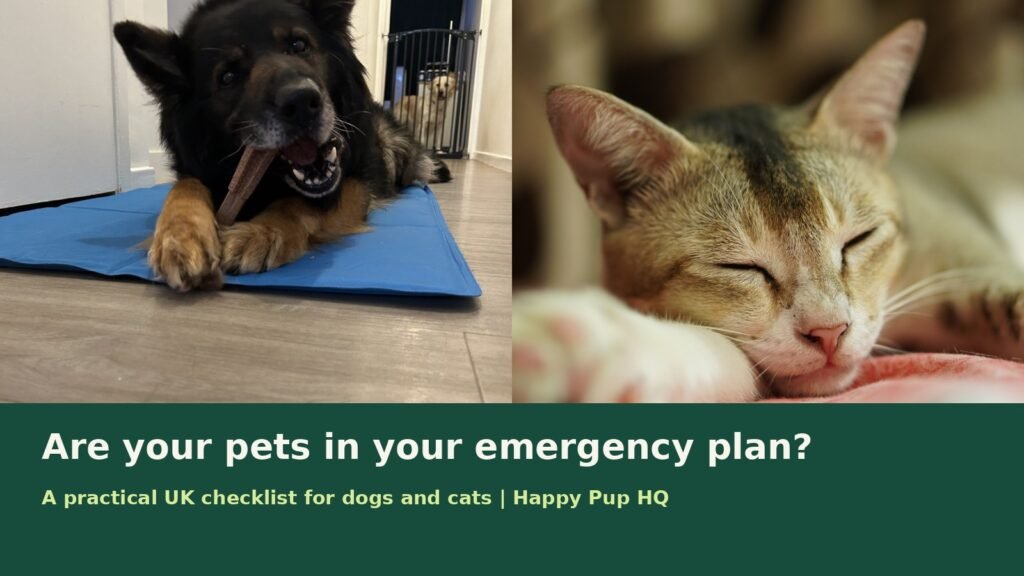
Hero: Loki, owner photograph, alongside a cat photograph by Ahnaf Piash / Pexels. Cat imagery is illustrative stock, not one of our own cats. Guidance reviewed 5 November 2026.